
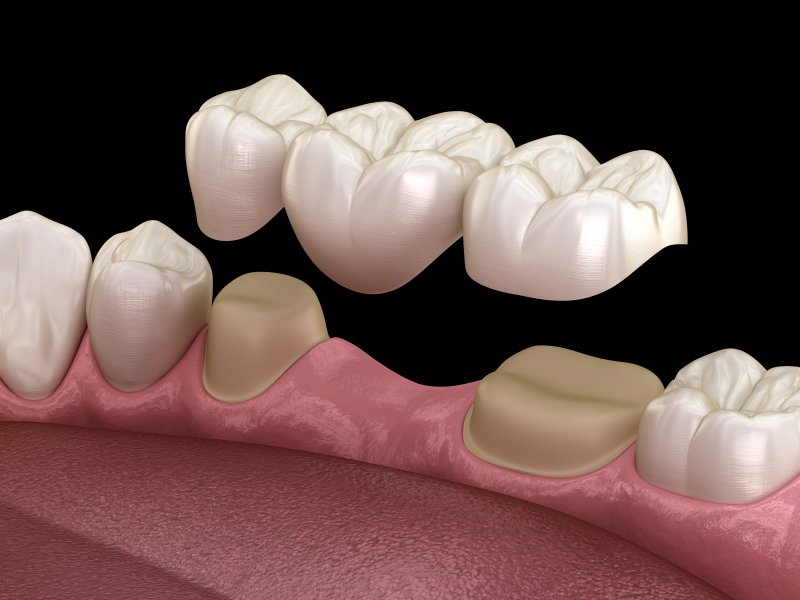
Dental bridges provide a stable, longer-lasting option for tooth replacement for those with multiple tooth loss. Their use in dental offices remains popular among patients, and their durability under daily wear and tear gives individuals confidence in their new smile. But did you know some factors can cause them to fail? Learn what they are and how to prevent them to keep your teeth lasting longer.
What Can Cause a Dental Bridge to Fail?
Dental bridges are designed to remain in place for up to 15 years with the right level of care; however, if any of the following occur, it can lead to possible failure:
- A Lack of Abutment Support: The two crowns that sit on either end of a dental bridge are secured over healthy teeth. This ensures that the restoration remains in place. However, if you lack sufficient support from these teeth, it can lead to an uneven distribution of pressure and potential damage.
- Bad Habits: Nail-biting, tongue thrusting, teeth grinding, eating ice, and consuming sticky or tough foods can cause a dental bridge to fail. Excessive pressure on your artificial teeth will eventually cause damage and necessitate the replacement of your restoration.
- Poor Oral Hygiene: Likely the most common cause of failure is poor oral hygiene. When you do not brush and floss properly around your bridge, you risk developing dental decay and gum disease, which can affect both real and artificial teeth and the soft oral tissues that support them.
- Insufficient Bone Support: Your jawbone plays a pivotal role in the success of your dental bridge, so if you lack support, your teeth will lack stability. This is when you can expect your restoration to fail.
How Can You Avoid Dental Bridge Failure?
If you want to make sure you take proper care of your new dental bridge and extend its lifespan, consider the following tips:
- Practice good oral hygiene at home by brushing and flossing daily (more than once a day) and rinsing. You must clean under the bridge to remove any debris and bacteria that may accumulate.
- See your dentist for regular dental checkups and cleanings every six months.
- Give up bad habits that can damage your bridge, such as eating ice, grinding your teeth, biting your nails, etc.
- Wear proper mouth protection if you play sports or suffer from bruxism at night.
Give your dental bridge a longer lifespan by maintaining your new teeth and keeping them healthy year after year.
About the Author
Dr. Admasu Gizachew, or “Dr. G” as he is known to his patients, provides custom-made, high-quality dental bridges for patients with multiple tooth loss. Transforming smiles with these uniquely crafted creations improves daily use and quality of life. He explains how to care for a dental bridge to ensure it lasts as long as possible. However, if you have questions or think your restoration might be failing, we encourage you to contact us at (732) 475-7535 to schedule an appointment right away.